Concussion Rehabilitation
A concussion can affect much more than an athlete’s ability to play their sport. Symptoms may impact balance, coordination, vision, reaction time, exercise tolerance, and everyday activities.
At Metro | TSI, our concussion rehabilitation program is designed to help patients safely progress through recovery with an individualized plan based on their symptoms, functional abilities, and goals.
A Comprehensive Approach to Concussion Recovery
Our clinical team evaluates the different systems that may be affected following a concussion and develops a progressive rehabilitation program to address identified deficits.
Depending on the individual, treatment may include:
- Balance and vestibular rehabilitation
- Visual and coordination exercises
- Progressive cardiovascular conditioning
- Strength and movement training
- Reaction-time and functional movement activities
- Sport-specific progression
- Return-to-activity and return-to-sport testing
Objective Testing Throughout Recovery
Metro | TSI utilizes advanced assessment technology and functional testing to help clinicians measure progress throughout the rehabilitation process.
When appropriate, TRAZER® technology may be incorporated into testing to assess areas such as reaction time, movement, balance, coordination, and functional performance.
These objective measures are used alongside clinical evaluation and the patient’s symptoms to help guide rehabilitation and return-to-activity progression.
Returning to Sport Safely
Returning to sport after a concussion should be a gradual process. Our team works with each athlete through a structured progression that increases physical and sport-specific demands as recovery advances.
The goal is not simply to return an athlete to competition, but to help them return with the movement, conditioning, confidence, and functional readiness needed to perform safely.
Steps to recovery
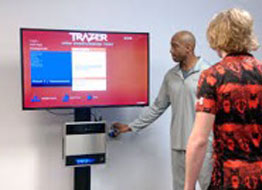
If the athlete has had a Baseline Concussion Assessment before an injury occurs, then immediately following a head injury, a TRAZER BESS Test is administered which provides comparative data which can be used to determine a specific recovery plan.
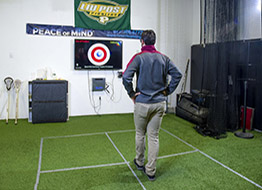
Next, a structured return-to-play protocol is followed.
Finally, a return-to-play TRAZER assessment is completed to determine if the athlete has fully recovered his movement/motor skills and is ready to return to play. The TRAZER simulates game play and measures movement performance in up to eight directions to detect deficits.